


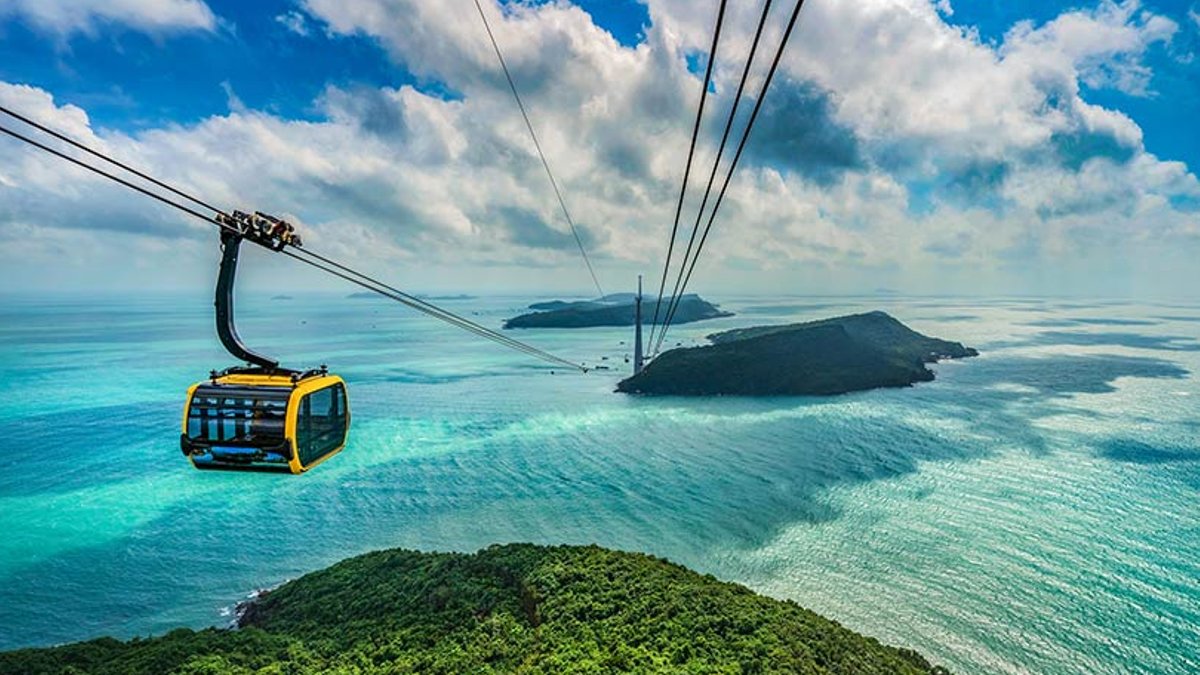
Phu Quoc, the largest and most populated island of Vietnam, is located in the Gulf of Thailand, a strategic geographical location with proximity to most major capital cities in Southeast Asia. The island has grown exponentially in recent years and has become one of the fastest-growing localities in Vietnam, with the tourism sector being the mainstay of the island’s economy.
Phu Quoc is at the dawn of its development, and investors interested should quickly seize opportunities as the island becomes more prominent on the map. Once isolated and underdeveloped, Phu Quoc island is underway to become an engine for Vietnam’s tourism sector and a leading luxury tourist destination in Southeast Asia, expected to rival the likes of Indonesia’s Bali and Thailand’s Phuket.
Phu Quoc’s Economic Profile
Phu Quoc island, including Phu Quoc City, and part of Kien Giang province, is the largest island in Vietnam, with a total area of 574 square kilometers – almost the same size as Singapore – a 150 km long coastline, and a population of approximately 179,480 people as of 2019. Located in the Gulf of Thailand, just 4 km from nearby Cambodia, and 45 km from the southern tip of mainland Vietnam, Phu Quoc boasts a strategic geographical location with proximity to most major capital cities in Southeast Asia.
Read Also: State of Pharmacy in Indonesia
Phu Quoc has grown exponentially in recent years and become one of the fastest-growing localities in Vietnam. In the 2010-19 period, the island recorded an average regional gross domestic product (RGDP) growth rate of over 38 percent, six times higher than the average annual growth of Vietnam. In 2020, Phu Quoc’s RGDP per capita stood at VND113 million (US$4,907) per person per year, almost double the national income rate.
Tourism Sector
Tourism is at the forefront of the economic sector of Phu Quoc thanks to its stunning beaches, unspoiled jungles, attractive year-round climate, and explosively growing infrastructure for luxury tourism. When combined with the service sector, revenue from the island’s tourism made up 70 percent of its RGDP and represented an average yearly growth rate of 25 percent from 2010 to 2019. From 2016 to 2019, the number of tourist companies increased from 219 to 726.
In 2019, Phu Quoc welcomed 5.1 million visitors, an increase of 26.9 percent compared to 2018. Revenue from tourism hit VND5,700 billion (US$247.6 million). The sector provides jobs for about 70 percent of the island population. As the number of tourists and revenue from tourism dropped significantly due to COVID-19, Phu Quoc is planning to fully vaccinate its residents by September and reopen for fully vaccinated foreign tourists by September or October this year as part of a vaccine passport pilot program.
Investment Opportunities
Much of the success in Phu Quoc’s tourism can be attributed to the significant investment into the infrastructure of the island, made by many major corporations such as Vingroup, Sungroup, BIMgroup, CEOgroup, MIKgroup, and Milltol since Vietnam’s Prime Minister issued a formal decision to transform Phu Quoc into the largest tourism center in the Mekong Delta region in 2004. A range of world-leading hotel companies such as InterContinental, Hyatt, Movenpick, Pullman, Novotel, JW Marriott, and Melia have also established a presence on the island, cementing the island’s position as a new world-class tourist destination in Southeast Asia.
Read Also: Seattle Tax Hike Pitched as Affordability Measure
According to the local authorities, the island prioritizes investments that contribute to the technical and social infrastructure development of the city. Prioritized industries include tourism, service, infrastructure development, renewable energy along with marine aquaculture. Up to January 2021, Phu Quoc has attracted 372 investment projects with total capital of US$16.5 billion. Real estate on Phu Quoc remains healthy with land prices continuing to increase despite COVID-19.
With its unique natural beauty, rich culture, and favorable investment climate, Phu Quoc is well-positioned to become a leading investment and tourism destination in Southeast Asia. The government and local authorities have created various favorable incentives to attract investment into the island, including allowing investors with an investment of VND100 billion (US$4.3 million) to reside up to 10 years in Phu Quoc.
In the 2021-2025 period, Phu Quoc will focus on developing socio-economic infrastructure, transport, power, water, waste management as well as schools and hospitals. Local authorities also plan more favorable policies for immigration, land rentals, and land use. These factors contribute to making the island more attractive to investors.


