


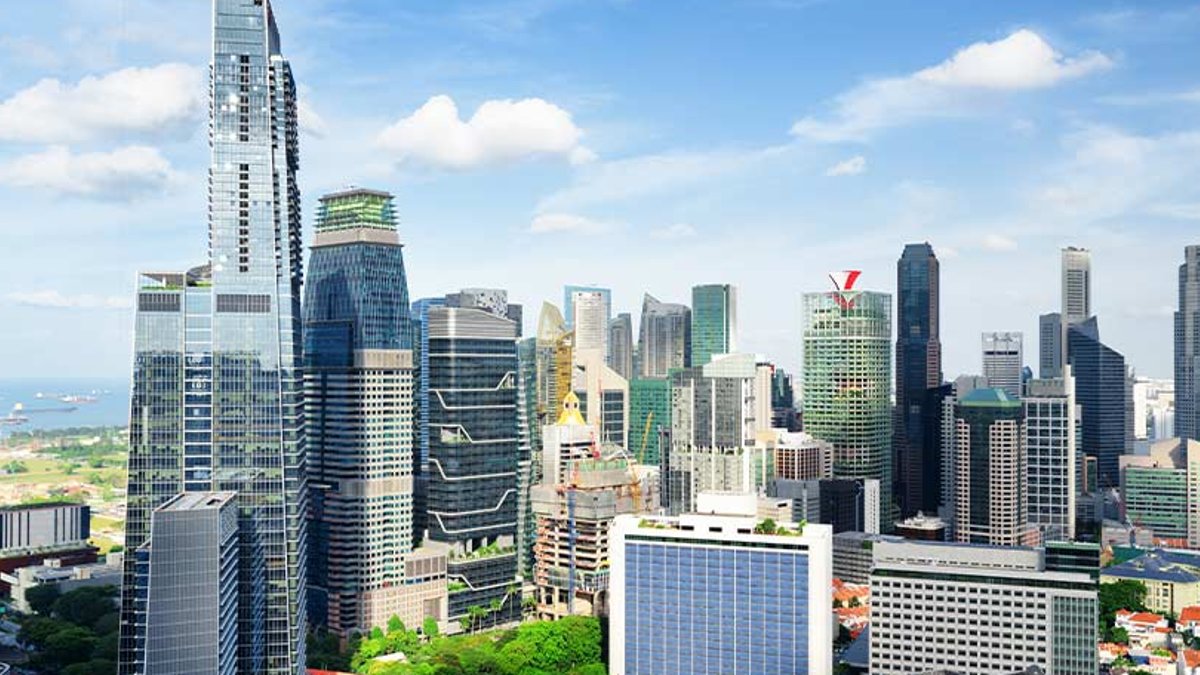
Singapore’s position as a corporate decision center is expanding, though its usefulness hinges on how businesses allocate functions between it and lower-cost neighbors like Vietnam. The city-state excels in regulatory expertise, research capabilities, and financial access, but these strengths do not apply uniformly across all sectors. Some industries benefit from a clear division of labor, while others find little reason to maintain a Singapore presence.
In 2025, the city attracted S$8.9 billion in annual business investment commitments, with technology, consumer goods, and professional services firms leading the charge. Data from the Singapore Economic Development Board reveals that headquarters operations and research and development projects drive most investments, highlighting Singapore’s appeal as a regional command center rather than a local sales hub. However, not every company can justify the higher operational costs.
Precision Engineering Split Between Singapore and Vietnam
Precision engineering and robotics firms demonstrate a clear split. Singapore hosts one in 10 global chip production facilities, a fifth of the world’s semiconductor equipment output, and 10% of global aerospace maintenance work. Its 2,700-plus precision engineering and Electronic Manufacturing Services (EMS) providers enable rapid prototyping, supplier validation, and pilot production—tasks requiring frequent design adjustments or tight coordination. Meanwhile, Vietnam delivers the scale and supplier networks essential for mass manufacturing.
ASTAR’s Advanced Remanufacturing and Technology Centre, with 95 consortium members, and the National Additive Manufacturing Innovation Cluster form the research backbone for this model. In May 2026, ASTAR and Becamex IDC signed a memorandum of understanding to establish the Vietnam Advanced Manufacturing Research Centre (VAMRC), creating a direct link between Singapore’s laboratories and Vietnam’s industrial parks. The partnership aims to streamline transitions from research to large-scale production.
This approach proves most effective for companies where intellectual property, precision requirements, or regulatory barriers justify Singapore’s higher expenses. Semiconductor equipment manufacturers, robotics developers, and aerospace firms fit this profile. For firms relying solely on low labor costs, the arrangement offers minimal advantages.
Related Post: Vietnam economy grows despite global challenges
MedTech Companies Tap Singapore’s Ecosystem
Biomedical and MedTech companies also leverage Singapore’s ecosystem. Eight of the world’s top 10 biopharmaceutical firms operate there, supported by initiatives like the Diagnostics Development Hub and the Biologics Pharma Innovation Programme. These platforms handle clinical validation and regulatory strategy—critical steps before scaling manufacturing in Vietnam. The model suits proprietary or highly regulated products, where quality control and intellectual property protection justify the cost.
Digital enterprises, including enterprise software, artificial intelligence, cybersecurity, and fintech, use Singapore to access regional customers and financial institutions. The city’s S$128.1 billion digital economy accounted for 18.6% of GDP in 2024, and by 2026, it will host 60-plus AI centers of excellence. This makes Singapore a natural hub for compliance-heavy industries. A team in Singapore can manage licensing and data requirements while Vietnamese teams handle localization and client-specific adaptations.
Luxury Brands Use Singapore as Test Market
Luxury retail, beauty, hospitality, and differentiated food brands treat Singapore as a test market. The city’s affluent, culturally diverse consumer base allows companies to refine pricing, store formats, and digital strategies before expanding. Brands like Pandora, Coach, and Blue Bottle Coffee have used Singapore to validate concepts before entering Vietnam or other ASEAN markets. The approach requires treating the test as a structured commercial exercise, not merely a branding effort.
Trade logistics and supply-chain management benefit from Singapore’s coordination capabilities rather than physical operations. The city’s 600-plus port connections and 29 free trade agreements make it ideal for inventory governance, supplier oversight, and risk mitigation. A regional team in Singapore can redirect orders if a Vietnamese factory or shipping route is disrupted, offering a critical advantage for companies with fragmented supplier networks or temperature-sensitive goods.
The strongest operational model assigns distinct functions to each location. Singapore handles decision-making, research, and oversight, while Vietnam provides scale and cost efficiency. This division works best for companies needing regional authority, specialist talent, or coordination across multiple markets. Those serving a single national market or competing on labor costs alone see less benefit.
Related Post: Foreign Firms Get Security Boost in Vietnam
Singapore Drives Real-Time Logistics Coordination
Singapore’s role in trade logistics extends to centralizing decision-making for companies with complex supply chains. The city-state’s logistics and transport firms provide end-to-end services, but its true strength lies in monitoring and adjusting operations across borders. For example, a Singapore-based team can track shipment delays in Vietnam’s ports or sudden changes in import tariffs and reroute cargo through alternative hubs—such as Malaysia’s Johor or Thailand’s Laem Chabang, within hours. This agility is particularly valuable for industries like pharmaceuticals, where temperature-controlled transport and regulatory compliance demand constant oversight.
The model also applies to commodity traders and specialty distributors operating in volatile markets. A regional logistics team can consolidate purchasing orders, negotiate bulk discounts with suppliers, and manage trade finance, tasks that would be cost-prohibitive to replicate across multiple markets. For companies with fragmented supplier networks, this centralization reduces exposure to currency fluctuations and inventory mismatches common in Southeast Asia.
Beyond logistics, Singapore’s financial ecosystem supports companies requiring cross-border capital or specialized banking services. The city’s 170-plus banks provide access to trade finance, letters of credit, and supply-chain financing tailored to Vietnam’s manufacturing sector. A Singapore-based corporate treasury can structure loans for Vietnamese factories at lower interest rates by leveraging the city’s stronger credit ratings and deeper bond markets. This financial layer is critical for companies expanding into Vietnam, where local banks may lack the capacity or risk appetite for large-scale industrial projects.
For companies that do not fit the precision, regulation, or scale-driven models, Singapore serves as a neutral ground for regional collaboration. Multinational firms often use the city to mediate disputes, negotiate supplier contracts, or host cross-border meetings, functions that are harder to replicate in Vietnam’s more fragmented business environment. Its 15,000-plus legal and professional services firms specialize in cross-jurisdiction disputes, making it a preferred venue for resolving issues between Vietnamese factories and global buyers. This role focuses less on direct cost savings and more on operational stability, particularly for industries where trust and contract enforcement are critical.


