


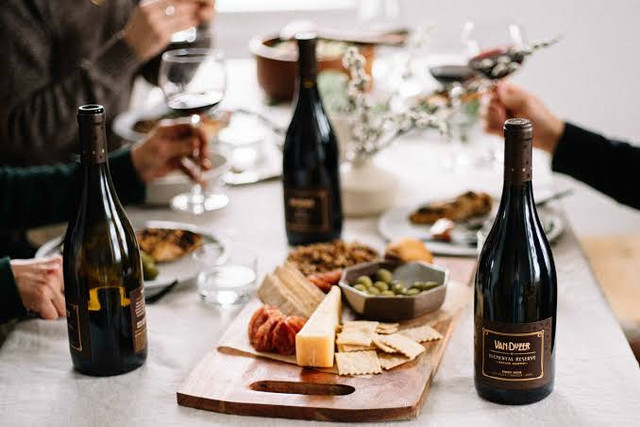
Wine pairing has a reputation for being intimidating, mostly because it’s usually explained in terms only sommeliers use comfortably. But the core logic behind a good pairing is simpler than it sounds, and once you understand a few basic principles, you can make solid choices for an ordinary Tuesday dinner without needing to memorize a single vineyard name.
The most useful starting rule is matching weight to weight. A light, delicate dish — grilled fish, a simple salad, light pasta — gets overwhelmed by a big, heavy red, while a rich dish like braised short ribs will make a light white wine taste thin and forgettable by comparison. Before thinking about specific grape varieties, just ask how “heavy” the dish feels, and look for a wine with roughly the same weight.
Acidity is the second lever, and it’s the one home cooks underuse the most. A wine with noticeable acidity — most whites, and lighter reds like Pinot Noir — cuts through fat and richness in a way that makes both the food and the wine taste better together. This is why a crisp white so often works with anything creamy or fried; the acid resets your palate between bites instead of letting richness build up and become cloying.
Sweetness deserves more attention than it usually gets, too. Spicy food in particular pairs far better with a slightly sweet wine than a dry one — the sweetness tempers the heat, while a dry wine, especially a tannic red, can actually intensify the burn. This is the single most common mismatch people make at home: reaching for a bold dry red with spicy takeout, when an off-dry Riesling would do far more for the meal.
Tannins, the drying, slightly bitter sensation in many red wines, work best with protein and fat. This is the actual reason behind the old “red with meat” rule — tannins bind with protein and soften on the palate, which is why a tannic red feels harsh next to a salad but balanced next to a steak. Once you understand the mechanism, the rule stops feeling arbitrary.
None of this requires expensive bottles to test. A few affordable options across dry white, off-dry white, light red, and full-bodied red give you enough range to start noticing these patterns yourself at home. The category itself is enormous — wine spans thousands of grape varieties and regional styles — but the underlying pairing logic stays remarkably consistent no matter which bottle you’re holding, which means once the basics click, they apply almost everywhere.


