


JOHOR Bahru-based BCB Bhd is positioning itself for the state’s next phase of growth, focusing on infrastructure-driven economic shifts rather than chasing property cycles. According to executive director Lindy Tan, the developer sees opportunities across Johor as connectivity improves, industrial activity expands, and economic ties with Singapore deepen. The upcoming Johor Bahru–Singapore Rapid Transit System (RTS) Link and the Johor-Singapore Special Economic Zone (JS-SEZ) are reshaping how people and businesses move through the region.
Iskandar Puteri: From Property Cycle to Structural Growth
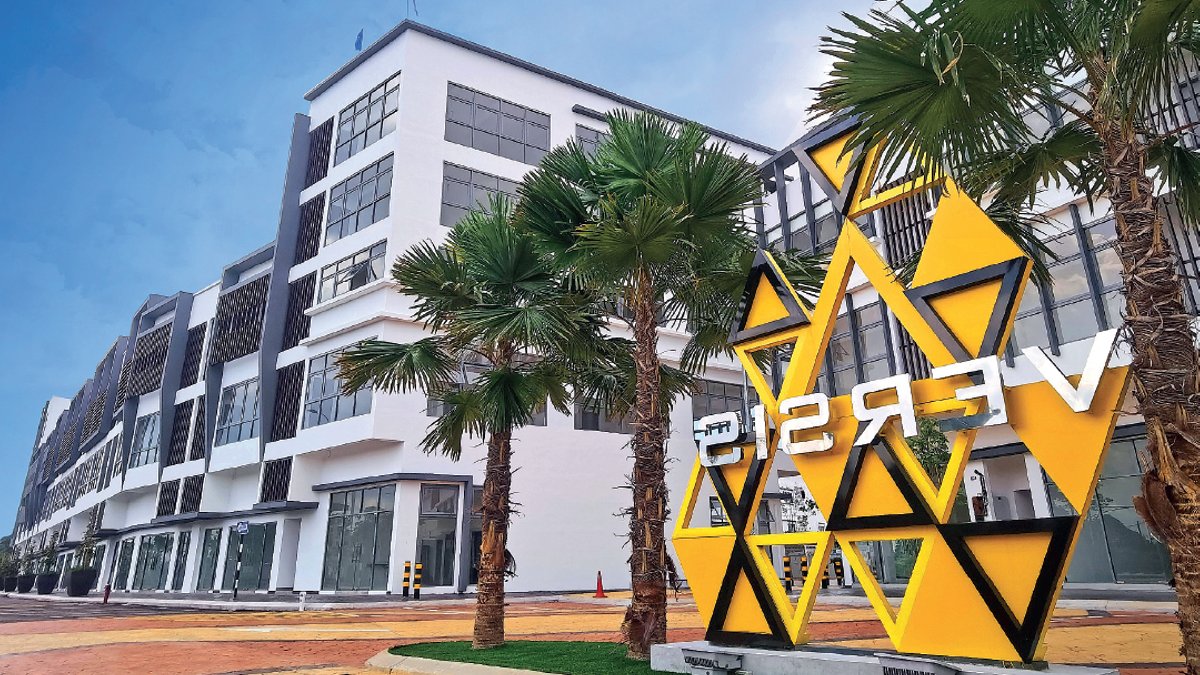
BCB’s primary focus remains Iskandar Puteri, where it is preparing to launch the second phase of its 35-acre Lumina Commercial Park, valued at RM200.23 million. Tan notes that the first phase sold out international units within three months, with buyers primarily being business owners rather than Singaporean investors—a shift from earlier trends. This reflects a broader movement of F&B operators and other businesses purchasing premises instead of leasing. Another commercial project, Versis 2, is also in the pipeline with an estimated gross development value (GDV) of RM225.53 million. These developments capitalise on improved connectivity and industrial expansion in southern Johor.
Industrial Expansion Beyond Johor Bahru
While Iskandar Puteri remains central, BCB is eyeing opportunities in Batu Pahat, where it has acquired over 280 acres of agricultural land for potential industrial development. The project is in the planning stage, but investor interest has already emerged. Tan attributes this to the JS-SEZ’s spillover effect, which may drive manufacturers to seek lower-cost land beyond Johor Bahru. Rising property prices in the capital are encouraging companies to explore locations like Batu Pahat, which could benefit from improved regional access via the West Coast Expressway. “We do expect a spillover effect [from JS-SEZ], especially in manufacturing and industrial activity, into other parts of Johor,” Tan said.
In Kluang, BCB has purchased two commercial land parcels to assess the town’s medium-term potential, citing improving rail connectivity and growing tourism activity as key drivers. The company’s strategy emphasises tailoring projects to local market needs rather than applying a uniform approach. “We believe Johor’s growth story is becoming increasingly multi-nodal rather than concentrated solely within Johor Bahru city centre,” Tan explained. While Johor Bahru remains the state’s main gateway, population growth and infrastructure investments are creating opportunities in secondary centres.
BCB’s approach balances product quality with affordability as construction costs rise, particularly in residential markets where buyers prioritise practicality, sustainability, and long-term value. Owner-occupiers and local upgraders continue to support its township projects, which require careful planning to maintain value retention. The developer’s pipeline also includes township developments in Batu Pahat with a total GDV of RM185.39 million.
Related Post: Longnor Love: Finding the Ideal Engagement Ring Style
Residential Strategy Meets Rising Costs
BCB’s leadership stresses that its launches remain “calibrated according to market demand,” avoiding overextension. Tan reiterates the company’s commitment to long-term value creation, stating, “We want BCB to be known as a responsible developer that creates long-term value, not just through buildings, but by staying true to what we stand for: building communities and beyond.” This disciplined approach positions BCB to benefit from Johor’s evolving economy, with projects ranging from commercial hubs in Iskandar Puteri to townships and a proposed industrial development in Batu Pahat, BCB is ready to participate in a state whose growth map is becoming increasingly diverse.
Klang Valley Projects Advance
In the Klang Valley, BCB continues developing Hometree in Kota Kemuning, with its final phase of landed strata homes and semi-detached properties valued at RM302.3 million. Commercial components for Phases 4 and 5 of Hometree, with a combined GDV of RM385.27 million, are pending approvals. These projects highlight the company’s market-specific strategies, adapting to the Klang Valley’s mature, competitive environment by focusing on lifestyle and differentiation.


