


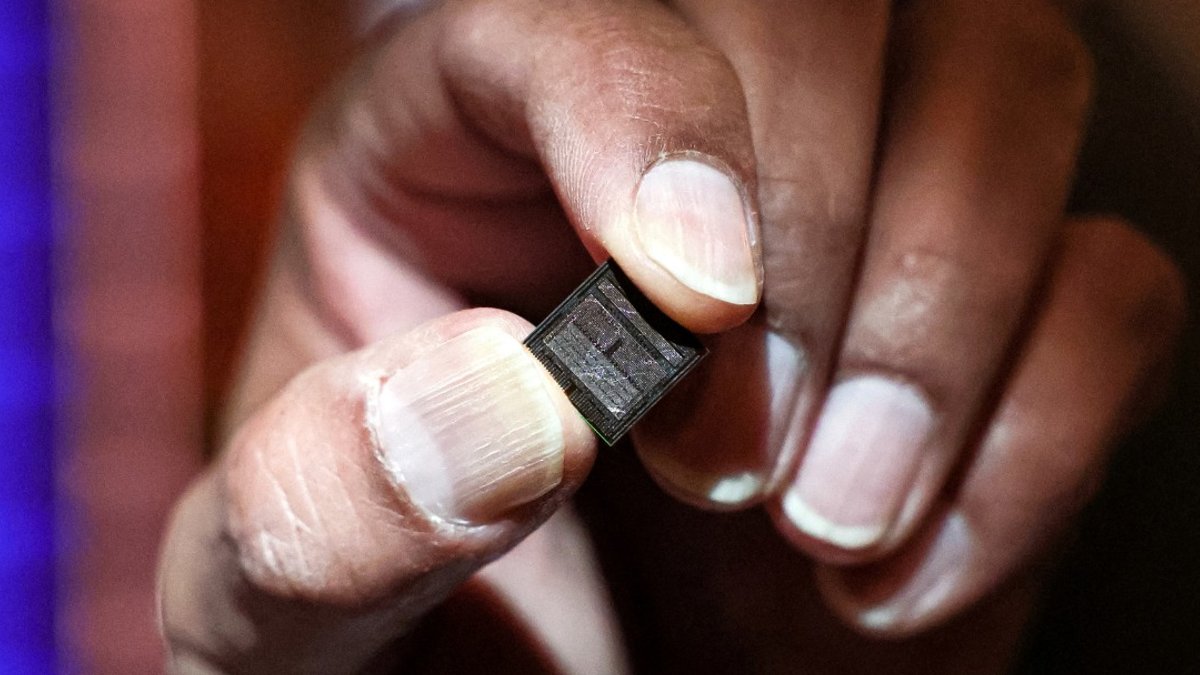
Taiwanese President Lai Ching-te urged US memory chipmaker Micron Technology and its workers to negotiate “sincerely” on Thursday, ahead of a potential strike by the company’s union. The call came during the opening of a new Micron advanced assembly and testing facility in Taichung.
Last week, a Taiwanese union representing Micron workers announced it had secured authorization from members to strike over a dispute regarding the company’s bonus scheme, escalating labor tensions at the firm’s largest manufacturing hub on the island.
Micron employs approximately 15,000 people in Taiwan, one of its key manufacturing centers, and has invested over NT$1.6 trillion (US$49.4 billion or RM201.7 billion) in the country.
Lai emphasized the importance of communication between labor and management, stating, “We also hope both labour and management will uphold the spirit that fish need water and water needs fish, continuing to negotiate sincerely and in good faith to build the broadest possible consensus.” He added that harmonious labor relations enable employees to work with peace of mind while allowing businesses to progress steadily.
Lai acknowledged Micron’s commitment to Taiwan and expressed hope for continued investment growth, noting the company’s support for high-bandwidth memory (HBM) research and development. Taiwan plays a critical role in Micron’s DRAM and HBM chip production, which are essential for artificial intelligence servers.
Micron’s COO, Manish Bhatia, did not address the potential strike in his remarks, instead highlighting that the factory has fully sold its 2027 capacity and expects HBM demand to outpace other DRAM segments through 2028.
Two unions representing Micron’s Taoyuan and Taichung operations stated last week they are urging it to present a concrete profit-sharing proposal. Mediation with the Taoyuan union concluded without an agreement in September, while negotiations with the Taichung union continue.
The unions have organized a rally in Taipei for October 19, which they clarified will not constitute a strike.
Historical labor disputes in Taiwan’s semiconductor sector often reflect broader tensions between global corporations and local workers seeking greater profit participation.
Such patterns suggest that high-tech manufacturing hubs frequently face pressure to balance competitive global positioning with domestic workforce expectations, particularly in regions where companies rely heavily on government support for strategic initiatives like HBM development.


