


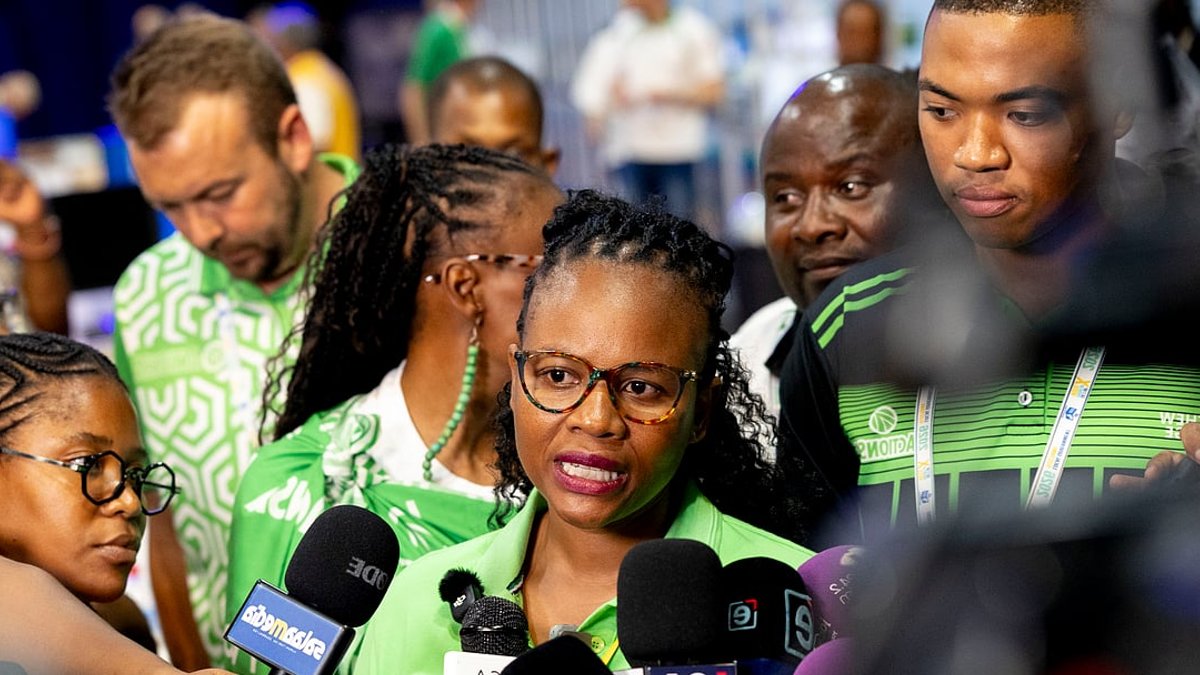
In the Tshwane municipal elections, ActionSA’s seats more than doubled, and Herman Mashaba is now adamant that Nasiphi Moya should remain mayor in any coalition arrangement.
While ActionSA claims Nasiphi Moya revitalized the capital, the numbers contradict that narrative. Most of the R4.3 billion reduction in debtors’ book comes from write-offs, and the city’s electricity losses have climbed to 21%.
Efforts to recover debts and the Eskom court case were already underway during Cilliers Brink’s tenure. The end of national power cuts and a new property valuation also played a role in the improvements.
Hügo Krüger asks how much of the recovery ActionSA can actually claim.
A muddled verdict
Tshwane’s latest verdict, following the 2026 municipal elections, was a muddled one.
Tshwane’s election results again produced a divided council: the DA secured 74 seats, ActionSA 48, and the ANC 44.
ActionSA’s seat count surged from 19 in 2021, while the ANC’s share fell from 75.
Shortly after the vote, Herman Mashaba declared that any coalition deal would have to keep Nasiphi Moya as mayor.
The party’s push for Moya’s continued leadership hinges on a year-long campaign. Last August, ActionSA’s national leader, Michael Beaumont, argued she had overhauled the city in under two years—a feat neither the ANC nor DA had achieved.
Such narratives require a scapegoat, and Beaumont has pinned the city’s struggles on the DA-led administration under former mayor Cilliers Brink.
While this messaging strategy may resonate with voters, a closer look at the data and timeline undermines its credibility.
ActionSA points to a drop in the debtors’ book from R30 billion to R25.69 billion as evidence of effective leadership.
Read Also: 2028 Presidential Race Heats Up as Candidates Emerge
Yet the city’s own figures show R2.42 billion written off indigent accounts and a further R1.83 billion removed from more than 31,500 inactive accounts.
That is R4.25 billion in accounting adjustments, nearly the whole reduction. A cleaner ledger is not a fuller treasury. By October 2025, the book had already crept back to R25.9 billion.
The utility tells the same tale. The Auditor-General’s 2024/25 report recorded electricity losses of R1.87 billion, 21% of electricity purchased, up from 19% a year earlier.
That is not what a transformed enterprise looks like.
An outsider who arrived to rescue a failing city
ActionSA presents itself as an outsider who arrived to rescue a failing city, but it spent a significant period inside the government it now condemns.
Brink served as mayor from 28 March 2023 to 26 September 2024, roughly 18 months.
He won by 109 votes to 102 and presided over a coalition that was fragile from the start; Moya became the city’s fourth mayor in three years.
ActionSA held the deputy mayoralty and several MMC positions in that coalition, and Moya herself was elected deputy mayor in January 2024.
When 120 councillors voted Brink out, ActionSA backed the ANC’s motion. What followed was hardly an ActionSA government: Moya’s mayoral committee had five ANC members and a single ActionSA representative, and the ANC’s Eugene Modise took the finance portfolio.
More importantly, the recovery now attributed to Moya had begun before her. In February 2024, Brink announced a plan to collect R1 billion a month from debtors.
Tshwane Ya Tima, the campaign of electricity and water cut-offs against defaulters, was launched in 2022 and became standard procedure under Brink in May 2023.
National load-shedding ended on 26 March 2024, with 1,656 hours of load-shedding in 2024 against 6,948 in 2023.
Read Also: South Africa Bars Africa Bitcoin Corp’s Top Executives
That was a national achievement rather than a municipal one, but it relieved the pressure on a city that lives off electricity sales.
Eskom took the city to court in July 2024, with Brink still in office. Moya deserves credit for concluding the settlement, made an order of court on 26 November 2024, but she did not start the process.
Nor did Brink inherit a healthy institution. Tshwane was placed under provincial administration in March 2020, just as Covid struck, and revenue collection fell sharply.
The Auditor-General later pointed to “ineffective financial recovery” planning and poor debt collection.
Some of what is now sold as an extraordinary turnaround is a climb out of an exceptionally deep hole. Brink also had to govern through a four-month strike.
It began on 26 July 2023 over a 5.4% increase that the city said it could not afford, at a cost of about R600 million, and 255 municipal vehicles were torched.
Even the revenue story has other authors. A new valuation roll took effect on 1 July 2025, and many property valuations doubled, widening the base on which the city can bill homeowners.
That is a statutory exercise, not an act of managerial genius, and Beaumont himself has said the review began under Brink.
Any honest accounting has to ask whether the gains come from better governance or from a larger tax base.
Fairness demands one concession. The number of audit qualification areas fell from six to two in 2024/25, and Moya’s administration deserves recognition for clearing that up.
He led a fragile coalition for about 18 months in a municipality with years of accumulated dysfunction.


