


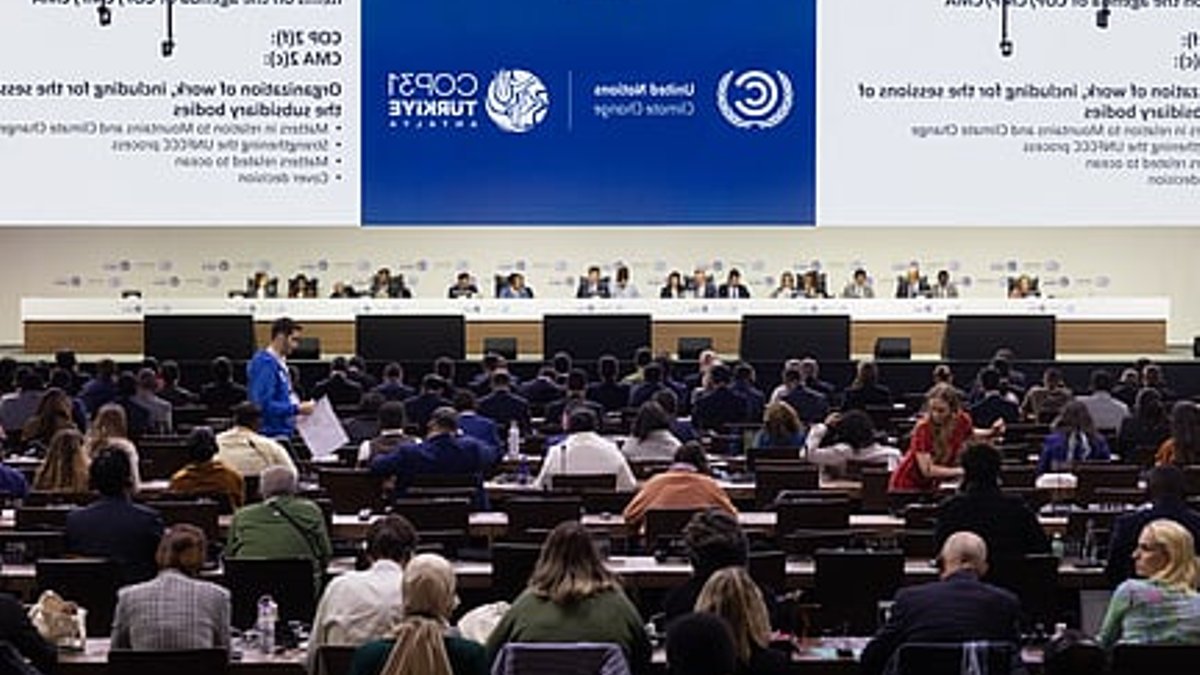
The United Nations Climate Change Conference, COP31, has begun in Antalya, Turkey, centered on the theme “Driving Implementation through Cooperation and Collective Action.” Economist Mariana Mazzucato asserts that the climate crisis now tests governments’ capacity rather than ambition, as decades of outsourcing and cost-cutting have weakened state capabilities, leaving them ill-equipped to transform goals into action.
According to Mazzucato, the answer starts with procurement, and the Belém Declaration on Sustainable Public Procurement provides a framework for states to spend with clear outcomes in mind, rather than simply taking the cheapest bid. This approach can help build green industries and supply chains.
State Capacity and Climate Action
Globally, greenhouse-gas emissions are still rising, and climate-related disasters are growing more frequent and severe. The UN Environment Programme has warned that even if governments follow through on their current commitments, the world will overshoot the Paris climate agreement‘s target of capping global warming at 1.5° Celsius.
Governments need to take stronger steps to handle the climate emergency and must have the systems in place to do so, yet in many instances the answer is negative because state capacity has been steadily eroded over the last forty years.
Mazzucato and her team have published reports on the necessary steps for transforming climate goals into actual actions, highlighting the need for robust state capacity and capabilities to create a fair green future. Ultimately, implementing climate measures is the responsibility of public institutions, which require coordinating ministries, purchasing agencies, lending banks, and civil servants capable of turning objectives into actionable programs.
The Power of Procurement
Government purchasing can serve as a strategic tool for shaping markets and pursuing socially beneficial aims. By clearly defining the desired outcomes, states can generate demand for novel products, promote investment in sustainable production methods, and bolster domestic supply chains.
The Belém Declaration establishes four complementary principles for advancing sustainable public procurement, including embedding environmental and social objectives in all procurement decisions and scaling up sustainable public procurement to create predictable demand and stimulate investment.
Read Also: South Africa unity government nears end
For instance, Recife city and the Bahia state have adopted sustainable procurement methods, showing that outcome-based policies and buying are both feasible and highly successful. Nevertheless, buying alone cannot achieve the full economic transformation required, and it functions best when combined with a mix of supply and demand measures and as part of a broader mission-driven industrial strategy.
As Mazzucato points out, the ideal purchasing process demands a whole-of-government approach, a model Brazil has adopted via its Interministerial Commission on Sustainable Development Procurement. Additionally, structured public-private cooperation is essential to spark innovation, broaden sustainable supply, and improve market readiness.
Given that COP31 is in progress, nations that signed the Belém Declaration should release their implementation roadmaps, including their mission targets and monitoring plans. Simultaneously, more countries should join the initiative and start exchanging experiences regarding sustainable public procurement, and those managing climate finance should outline their strategies for explicitly backing the public-sector capabilities required for success.
Esther Dweck, Brazil’s minister of management and innovation in public services, and Mazzucato have issued a policy brief on utilizing the Belém Declaration to support inclusive and sustainable growth, detailing how the declaration can be converted into tangible results and the role COP31 can play.
The brief analyzes the main challenges and opportunities related to implementing the Belém Declaration and scaling up sustainable public procurement. It draws on experiences from the city of Recife and the state of Bahia, as well as school-feeding programs in Brazil, Scotland, and Sweden.
Implementation and Results
The policy brief reviews recent practical examples of sustainable procurement in operation, which demonstrate that outcome-oriented policies and purchasing are both achievable and effective. However, relying solely on purchasing cannot achieve the economy-wide transformation that is necessary.


